
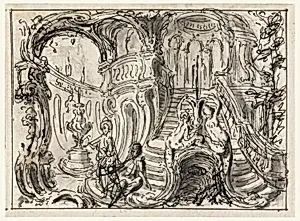
Design for a Patch-Box
Classification
ornament
Department
Smithsonian Collection
Museum
Smithsonian American Art Museum
Credit
Purchased for the Museum by the Advisory Council
Accession Number
1911-28-2
Rights
Public Domain
About this artwork
Research in Progress
Art Historical Context
Pierre Edme Babel, a French active in the mid-18th century (1720–1775), created this *Design for a Patch-* around 1745. As a preparatory drawing for a small luxury container, it exemplifies the ornate ornamental designs of the Rococo period, a style flourishing under Louis XV that emphasized playful elegance, scrolling motifs, and intricate details inspired by nature and fantasy. Patch boxes were fashionable accessories for women, holding tiny beauty patches—small black silk or velvet spots applied to the face to enhance complexion or flirtatiously draw attention to features. This work, classified as an ornament and now in the Smithsonian American Art Museum's collection (purchased by the Advisory Council), highlights the collaborative artistry between designers and goldsmiths or enamellers. Such designs were often rendered in ink, gouache, or watercolor on paper, guiding the creation of enameled gold or silver boxes that symbolized wealth and refinement. Babel's contribution reflects the era's cultural obsession with personal adornment, bridging fine art and decorative objects in a time when French craftsmanship set European standards. Though research continues, this piece invites us to appreciate the delicate ingenuity behind everyday opulence, reminding visitors of 18th-century tastes where even the smallest trinket was a canvas for creativity.