
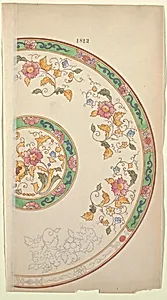
Design for a Plate
Medium
tableware designs
Classification
tableware designs
Department
Smithsonian Collection
Museum
Smithsonian American Art Museum
Credit
Smithsonian American Art Museum
Accession Number
1985-14-11
Rights
Public Domain
About this artwork
Research in Progress
Art Historical Context
**Design for a Plate by Noritake, from 1880–1910, offers a glimpse into the elegant world of early modern tableware design. Produced by the pioneering Japanese firm Noritake—known for its exquisite porcelain— this piece reflects the company's dual presence in Japan and New, highlighting the trans-Pacific exchange of craftsmanship during a transformative era. Housed in the Smithsonian American Art Museum's collection it exemplifies tableware designs that blended traditional Japanese techniques with emerging Western aesthetics. This period coincided with Japan's Meiji era (1868–1912), when the nation rapidly modernized and exported luxury goods like ceramics to eager American markets. Noritake, through its New York operations, catered to affluent U.S. households seeking refined dinnerware. The design likely features delicate motifs suited for plates, emphasizing functionality and beauty in everyday use—a hallmark of Japonisme's influence on global design. Though research is ongoing, this artwork underscores tableware's artistic value, elevating utilitarian objects into collectible art. Visitors can appreciate how such designs bridged cultures, influencing American table settings and porcelain innovation for generations.