
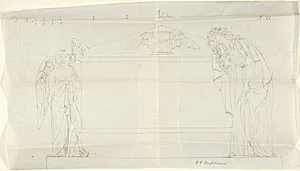
Design for a Sarcophagus with Two Mourning Figures
ca. 1850
Medium
Graphite, with inscriptions in pen and brown ink
Dimensions
sheet: 13 15/16 x 8 in. (35.4 x 20.3 cm)
Classification
Drawings
Department
Drawings and Prints
Museum
Metropolitan Museum of Art, New York, NY
Credit
Gift of Mrs. John De Witt Peltz, 1977
Accession Number
1977.382.7
Rights
Public Domain
Tags
Art Historical Context
John Gibson's *Design for a Sarcophagus Two Mourning Figures*ca. 1850) is a poignant preparatory drawing that captures the neoclassical sculptor's vision for a grand funerary monument. Rendered in graphite with inscriptions in pen and brown ink a sheet measuring 13 1516 x 8 inches, it features two sorrowful figures—likely women or angels—flanking a sarcophagus, evoking profound themes of grief and remembrance. Gibson, a prominent British artist based in Rome, drew inspiration from ancient Roman and Greek art, blending classical ideals of beauty and solemnity with Victorian sensibilities around death and mourning. As a drawing from the Drawings and Prints department at The Metropolitan Museum of Art, this work exemplifies the meticulous preparatory process of 19th-century sculptors. Graphite allowed Gibson to sketch fluid contours and subtle shading for volume, while the ink annotations likely guided carving or casting. In an era obsessed with elaborate memorials amid high mortality rates from disease and empire-building, such designs held deep cultural resonance, symbolizing eternal loss and spiritual consolation. This gifted piece invites visitors to reflect on how art bridged the ancient and modern worlds, turning personal sorrow into timeless elegance.
About the Artist
John Gibson · 1790–1866
Outstanding Neoclassical sculptor who experimented with the ancient practice of coloring statues, e.g. his 'Tinted Venus' (1851). Flaxman encourgaged him to go to Rome, where he spent most of his life. He left his fortune to the National Gallery, London. British sculptor, active Rome. Comment on works: sculptor