
Design for a Stage Set
1830–90
Classification
Drawings
Department
Drawings and Prints
Museum
Metropolitan Museum of Art, New York, NY
Credit
Gift of Mrs. Henry T. Curtis, 1953
Accession Number
53.668.136
Rights
Public Domain
Tags
Art Historical Context
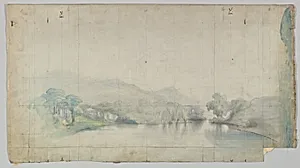
Eugène Cicéri (1813–1890), a leading French scenic artist of the Romantic era, created this *Design for a Stage Set* sometime between 1830 and 1890. As a master of theatrical illusion, Cicéri specialized in grand, atmospheric landscapes that brought operas and ballets to life on stages like Paris's Opéra. This preparatory drawing, housed in the Metropolitan Museum of Art's Department of Drawings and Prints, exemplifies his skill in envisioning expansive scenery—likely a dramatic vista blending natural beauty with theatrical flair, as suggested by its landscape and stage design tags. In the 19th century, stage design evolved from flat backdrops to immersive environments, fueled by gas lighting and Romanticism's love for sublime nature. Cicéri's works, often rendered in gouache or watercolor on paper, served as blueprints for painters and machinists, transforming static sketches into dynamic spectacles. His designs elevated productions by masters like Meyerbeer, making theaters portals to fantastical realms. Today, this gift to the Met from Mrs. Henry T. Curtis in 1953 offers a glimpse into the artistry behind the curtain. It highlights how drawings like this bridged imagination and performance, influencing modern set design and reminding us of theater's power to conjure worlds.
About the Artist
Eugène Cicéri · 1813–1890
Étienne Eugène Cicéri (1813-1890) was a French painter, lithographer, and theatrical designer who became a notable figure in the Barbizon School movement. Born in Paris on January 27, 1813, into an illustrious artistic family, he was the son of renowned scenographer Pierre-Luc-Charles Cicéri and the nephew of painter Eugène Isabey. Cicéri occupies an important position in 19th-century French land...