
Design for a Stage Set
1830–90
Classification
Drawings
Department
Drawings and Prints
Museum
Metropolitan Museum of Art, New York, NY
Credit
Gift of Mrs. Henry T. Curtis, 1953
Accession Number
53.668.171
Rights
Public Domain
Tags
Art Historical Context
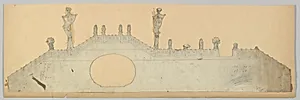
Eugène Cicéri'sDesign for a Stage Set* (ca. 1830–90) captures the theatrical magic of 19th-century France, a golden age for opera and grand spectacle at venues like the Paris Opéra Cicéri, a prolific French artist and designer (1813–1890), in creating immersive environments that blended Romantic drama with architectural grandeur. This drawing, housed in the Metropolitan Museum of Art's Drawings and Prints, exemplifies his role in elevating stagecraft to an art form, where painted backdrops and illusions transported audiences to fantastical realms. As a preparatory drawing—likely executed in gouache, watercolor, or ink on paper— the work highlights the meticulous techniques of stage design. Artists like Cicéri used perspective, lighting effects, and atmospheric color to simulate depth and mood on vast proscenium stages, influencing everything from Wagnerian operas to ballet productions. These designs were not mere sketches but blueprints for spectacle, demanding collaboration between painters, carpenters, and machinists. This piece, generously gifted to the Met in 1953, offers a window into how visual arts fueled cultural life during France's Romantic era. Imagine the applause as Cicéri's visions sprang to life under gaslit footlights—a testament to theater's power to enchant and inspire.
About the Artist
Eugène Cicéri · 1813–1890
Étienne Eugène Cicéri (1813-1890) was a French painter, lithographer, and theatrical designer who became a notable figure in the Barbizon School movement. Born in Paris on January 27, 1813, into an illustrious artistic family, he was the son of renowned scenographer Pierre-Luc-Charles Cicéri and the nephew of painter Eugène Isabey. Cicéri occupies an important position in 19th-century French land...