
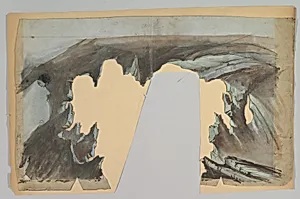
Design for a Stage Set
1830–90
Classification
Drawings
Department
Drawings and Prints
Museum
Metropolitan Museum of Art, New York, NY
Credit
Gift of Mrs. Henry T. Curtis, 1953
Accession Number
53.668.273
Rights
Public Domain
Tags
Art Historical Context
Eugène Cicéri (1812–1890), a prominent French Romantic painter and theater designer, created this *Design for a Stage Set sometime between 1830 and 1890. Working during a golden age of French opera and ballet at venues like the Paris Opéra Cicéri specialized in elaborate scenic designs that brought dramatic narratives to life. His works captured the era's Romantic fascination with grandeur, exotic locales, and emotional spectacle, influencing productions from grand operas to ballets. As a drawing from the Metropolitan Museum of Art's Drawings and Prints department—generously gifted by Mrs. Henry T. Curtis in 1953—this piece exemplifies the preparatory sketches vital to 19th-century theater. Likely executed in gouache, watercolor, or ink on paper (common for such designs), it showcases Cicéri's mastery of perspective, lighting effects, and architectural detail to evoke immersive stage illusions. These designs were not mere sketches but blueprints for carpenters, painters, and machinists, bridging art and performance. Cicéri's innovative sets, blending realism with fantasy, helped define the visual language of Romantic theater, making this drawing a window into how art fueled cultural entertainment. Visitors can appreciate its role in transforming static stages into dynamic worlds.
About the Artist
Eugène Cicéri · 1813–1890
Étienne Eugène Cicéri (1813-1890) was a French painter, lithographer, and theatrical designer who became a notable figure in the Barbizon School movement. Born in Paris on January 27, 1813, into an illustrious artistic family, he was the son of renowned scenographer Pierre-Luc-Charles Cicéri and the nephew of painter Eugène Isabey. Cicéri occupies an important position in 19th-century French land...