
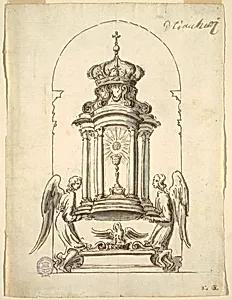
Design for a Tabernacle Door to be Executed in Bronze
ca. 1725
Classification
metalwork
Department
Smithsonian Collection
Museum
Smithsonian American Art Museum
Credit
Museum purchase through gift of various donors
Accession Number
1901-39-2526
Rights
Public Domain
About this artwork
Research in Progress
Art Historical Context
Step into the world of 18th American craftsmanship with *Design for a Tabernacle to be Executed in* by G B C, circa 1725. This intriguing preparatory work, now housed in the Smithsonian American Museum, outlines a grand ecclesiastical door intended for casting in bronze. Tabernacles, ornate receptacles for the Eucharist in Catholic churches, were symbols of devotion, and such designs highlight the fusion of artistry and faith during the Colonial era. Created around 1725, amid America's early colonial period, the piece reflects the skilled metalwork traditions imported from Europe and adapted locally. Though the exact medium of the design remains unknown, its classification as metalwork underscores the ambition of translating intricate patterns into durable bronze—a material prized for its longevity and luster in religious furnishings. G B C's vision captures the era's emphasis on ornate detailing, likely featuring scrolls, figures, or architectural motifs suited to sacred spaces. Acquired through museum purchase with gifts from various donors, this artifact invites ongoing research into its creator and context. It offers a window into how American artisans balanced imported styles with emerging national identity, reminding us of the quiet artistry behind colonial worship.