
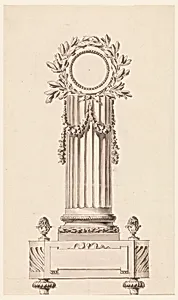
Design for a Table Clock
Medium
timepieces & measuring devices
Classification
timepieces & measuring devices
Department
Smithsonian Collection
Museum
Smithsonian American Art Museum
Credit
Purchased for the Museum by the Advisory Council
Accession Number
1911-28-195
Rights
Public Domain
About this artwork
Research in Progress
Art Historical Context
**Design for a Table Clock by Richard de Lalonde a French artist active from 1780 1796, captures the elegance of late 18th-century decorative arts. Created in 1780, this design the height of the Ancien Régime in France when opulent timepieces were prized status symbols among the nobility. clocks like this one blended functionality with intricate ornamentation, showcasing the era's fascination with precision engineering and refined aesthetics amid the Enlightenment's emphasis on science and luxury. As a preparatory design—likely a detailed drawing or plan—Lalonde's work highlights the collaborative process between artists and craftsmen in producing high-end horological pieces. Classified under timepieces and measuring devices, it exemplifies how such instruments were not mere tools but artistic expressions, often featuring neoclassical motifs or elaborate casings. Though research on this specific piece is ongoing, it underscores the technical artistry of French workshops during a transformative period leading to the Revolution. Now part of the Smithsonian American Art Museum's collection, acquired through the Advisory Council's purchase, this design bridges European mastery with American curatorial interest. It invites visitors to appreciate the fusion of innovation and beauty in everyday objects, reminding us how timekeeping evolved from practical necessity to cultural icon.