
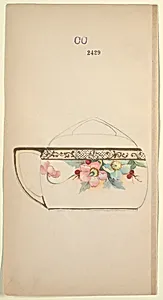
Design for a Teacup
Medium
tableware designs
Classification
tableware designs
Department
Smithsonian Collection
Museum
Smithsonian American Art Museum
Credit
Smithsonian American Art Museum
Accession Number
1985-14-22
Rights
Public Domain
About this artwork
Research in Progress
Art Historical Context
This elegant *Design for a Teac* from Noritake, bridging Japan and New York, dates to the dynamic period of 1880–1910. Produced as part of tableware designs in the Smithsonian American Art Museum collection, it exemplifies the artistry of early modern ceramics drafting—likely intricate patterns or prototypes for porcelain production. Noritake, a pioneering Japanese firm, specialized in fine china that blended traditional craftsmanship with Western appeal, making these designs blueprints for everyday luxury. Historically, this piece reflects Japan's Meiji-era export boom, when artisans adapted exquisite porcelain techniques for global markets, including the U.S. East Coast hubs like New York. As tea drinking surged in American homes, such designs introduced subtle Japanese motifs—perhaps floral or geometric elegance—into Victorian and Edwardian tablescapes, symbolizing cultural exchange and rising consumerism. Though research continues, this artifact highlights tableware's role as accessible art, transforming functional objects into heirlooms. Visitors can appreciate how Noritake's innovations democratized beauty, one teacup at a time.