
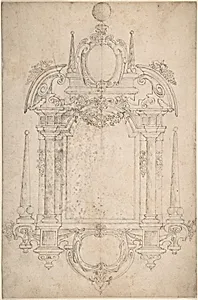
Design for a Tomb or Wall Monument
17th century
Medium
Pen and brown ink, over traces of graphite and ruled underdrawing
Dimensions
sheet: 11 15/16 x 8 11/16 in. (30.4 x 22 cm)
Classification
Drawings
Department
Drawings and Prints
Museum
Metropolitan Museum of Art, New York, NY
Credit
Purchase, The Elisha Whittelsey Collection, The Elisha Whittelsey Fund
Accession Number
53.522.35
Rights
Public Domain
Tags
Art Historical Context
This exquisite anonymous drawing from 17-century Italy presents a *Design for a Tomb or Monument*, a preparatory sketch likely intended for a grand funerary structure in a church or noble chapel. Crafted with pen and brown ink over graphite traces and precise ruled underdrawing, it exemplifies the meticulous planning that preceded monumental sculptures during the Baroque era. At 11 15/16 x 8 11/16 inches, the sheet the era's fascination with dramatic architecture, where tombs served not just as memorials but as theatrical statements of faith, power, and the afterlife. In historical context, such designs reflect Italy's Counter-Reformation fervor, when artists like Bernini elevated funerary art to evoke emotion and piety through intricate motifs—possibly including urns, putti, or allegorical figures hinted at in this composition. The ruled lines suggest architectural precision, blending drawing with engineering for stone carving. Housed in the Metropolitan Museum of Art's Drawings and Prints department, acquired through The Elisha Whittelsey Fund, this work offers a rare glimpse into the anonymous workshops that fueled Rome's opulent ecclesiastical projects. Though unattributed, its technique underscores the collaborative craft of 17th-century design, where ink's fluid lines allowed rapid iteration before costly marble execution. Visitors will appreciate how this modest sheet bridges sketch and splendor, revealing the artistry behind Italy's enduring monumental legacy.