
Design for a Wall Monument
René Charpentier, n.d.
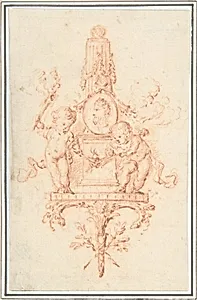
About this artwork
René Charpentier's *Design for a Wall Monument is a delicate preparatory drawing in red chalk, capturing the spirit of French Baroque architecture. Created around the late 17th or 18th century—though undated—this compact sketch (just under 6 by 4 inches) outlines a wall monument adorned with male figures and playful putti, or cherubs. These elements evoke the grandeur of commemorative sculptures often found in churches or grand estates, blending solemnity with lively ornamentation. Red chalk, a favored medium for draftsmen of the period, allowed Charpentier to achieve soft tonal modeling and fluid lines, ideal for architectural designs. As a specialist in ornament and architecture, he contributed to the opulent Louis XIV style, where intricate motifs like these putti symbolized divine playfulness amid human memorialization. This drawing exemplifies the meticulous planning behind monumental works, showcasing how artists refined ideas on paper before execution in stone or bronze. Housed in The Metropolitan Museum of Art's Elisha Whittelsey Collection, this piece invites visitors to appreciate the artistry behind the architecture. It highlights the collaborative world of 18th-century design, where sketches like Charpentier's bridged imagination and construction, leaving a vivid trace of France's gilded age.