
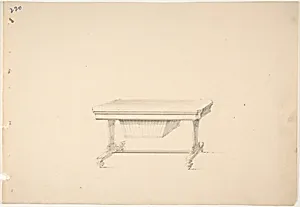
Design for a Worktable
early 19th century
Medium
Graphite
Dimensions
sheet: 8 7/16 x 12 3/16 in. (21.5 x 31 cm)
Classification
Drawings|Ornament & Architecture
Department
Drawings and Prints
Museum
Metropolitan Museum of Art, New York, NY
Credit
Harris Brisbane Dick Fund, 1938
Accession Number
38.37.121
Rights
Public Domain
Tags
Art Historical Context
This delicate graphite drawing, titled *Design for a Worktable*, captures the meticulous planning behind early 19th-century furniture design. Created by an anonymous artist during the Regency era, it depicts a functional yet elegant worktable—likely intended for domestic use, such as sewing, writing, light crafts. Measuring just 8 7/16 x 12 3/16 inches, the sheet exemplifies the precision of preparatory sketches in the ornament and architecture tradition, now housed in the Metropolitan Museum of's Drawings and Prints department thanks to the Harris Brisbane Dick Fund of 1938. Worktables like this one were cultural staples in British households, blending practicality with neoclassical influences popular in the period. They often featured fold-out surfaces, drawers, and slender legs, reflecting a shift toward lighter, more versatile furniture amid growing middle-class prosperity. As a design drawing, it offers a rare glimpse into the collaborative process between designers, architects, and cabinetmakers, highlighting graphite's role as an ideal medium for its fine lines and easy corrections. Graphite's subtle shading and sharp detailing here allowed the artist to convey proportions, joinery, and decorative motifs with clarity, bridging the gap from concept to crafted reality. For visitors, this unassuming sheet reveals the artistry behind everyday objects, inviting appreciation for the unseen labor shaping Regency interiors.
About the Artist
Anonymous, British, 19th century · 1800–1900
**Anonymous, British, 19th century** is not the name of a single individual but a standard museum attribution used for works whose creators remain unidentified yet are clearly British and date to the 1800s. Major institutions, including the Metropolitan Museum of Art, employ this designation for hundreds of drawings, prints, designs, and decorative studies that lack signatures or firm documentary ...