
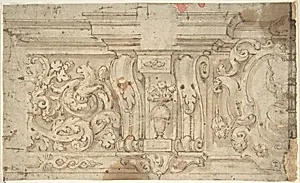
Design for an Architectural Frieze
17th century
Medium
Pen and brown ink, brush and brown wash
Dimensions
5-1/6 x 8-7/16 in. (13.1 x 21.4 cm)
Classification
Drawings|Ornament & Architecture
Department
Drawings and Prints
Museum
Metropolitan Museum of Art, New York, NY
Credit
The Elisha Whittelsey Collection, The Elisha Whittelsey Fund, 1952
Accession Number
52.570.161
Rights
Public Domain
Tags
Art Historical Context
This delicate *Design for an Architectural Fr*, created by an anonymous Italian artist the mid-16th century (though to the 17th century), a glimpse into the Renaissance fascination with classical ornamentation. Measuring just 5-1/6 x 8-7/16 inches, this preparatory drawing was likely intended for a grand architectural project, envisioning a sculpted band of intricate motifs—scrolls, foliage, and figures—that would adorn in the opulent style of the era. Housed in the Metropolitan Museum of Art's Drawings and Prints department, it exemplifies the meticulous planning behind Italy's lavish palazzos and churches. Rendered in pen and brown ink with brush and brown wash, the work showcases a favored technique of the period. The precise ink lines define bold contours and rhythmic patterns, while the subtle wash adds depth and shadow, mimicking the three-dimensionality of stone carving. This method allowed architects and designers to experiment affordably before committing to marble or stucco, bridging the gap between idea and execution. Such frieze designs highlight the cultural revival of ancient Roman motifs during the 16th century, blending them with Mannerist flair for exaggerated elegance. A testament to anonymous craftsmanship, it invites us to appreciate the unsung artistry that shaped Europe's enduring skylines. (198 words)