
Design for Berlin Wool Work
Medium
textile designs
Classification
textile designs
Department
Smithsonian Collection
Museum
Smithsonian American Art Museum
Credit
Smithsonian American Art Museum
Accession Number
1947-78-3
Rights
Public Domain
About this artwork
Research in Progress
Art Historical Context
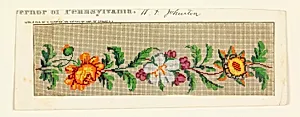
**Design for Berlin Wool Work by Nathaniel Currier (3–1888) the vibrant world of mid-19th-century American crafts. Created around 1860, this textile design served as a printed pattern for Berlin wool work—a popular embroidery technique using colorful wool yarns on canvas. Currier, a pioneering American lithographer and co-founder of the famed Currier & Ives firm, excelled at producing affordable, mass-market prints that brought art into everyday homes. Berlin wool work exploded in popularity during the Victorian era, especially in the United States, where patterns like this one allowed women to craft intricate pillows, slippers, and wall hangings. Imported originally from Berlin, these designs democratized fine needlework, blending European influences with American ingenuity amid the bustling pre-Civil War economy. Currier's lithographic expertise ensured crisp, detailed motifs that home embroiderers could easily follow, turning leisure time into creative expression. Housed in the Smithsonian American Art Museum, this piece highlights the intersection of commercial printmaking and folk art, showcasing how artists like Currier fueled a cultural phenomenon. It reminds us of the unsung role of women's handiwork in shaping American visual culture. (198 words)