
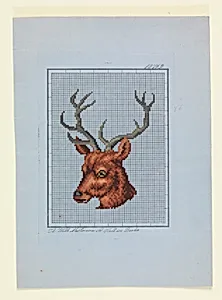
Design for Berlin Wool Work, Stag
ca. 1850
Medium
textile designs
Classification
textile designs
Department
Smithsonian Collection
Museum
Smithsonian American Art Museum
Credit
Smithsonian American Art Museum
Accession Number
1960-59-2
Rights
Public Domain
About this artwork
Research in Progress
Art Historical Context
**Design for Berlin Wool Work Stag** *ca. 1850, by Thomas Wilhelm* *Textile design, Smithsonian American Art Museum* Step into the vibrant world of Victorian needlework with Thomas Wilhelm Meister's *Design for Berlin Wool Work Stag*, created around 1850. This textile design served as a pattern for Berlin wool work, a popular embroidery technique that swept through Europe and America in the mid-19th. Using thick wool yarns on canvas, enthusiasts stitched intricate scenes for home furnishings like slippers, bags, and fire screens, turning domestic spaces into showcases of creativity and status. Meister, likely drawing from German pattern-making traditions, captured a majestic stag—a symbol of nobility and the hunt—in this detailed chart. Berlin wool work patterns like this one were mass-produced and widely distributed, fueling a craze among middle-class women who adapted bold, colorful designs from simple grids. Housed in the Smithsonian American Art Museum's collection, this piece highlights the intersection of art, craft, and commerce in an era when hobbies empowered personal expression. Though research continues, the design reflects the era's fascination with nature motifs and the democratization of fine art through accessible crafts, inviting us to appreciate the quiet artistry behind everyday Victorian treasures.