
Design for Ceiling at Fontainebleau
second half 19th century
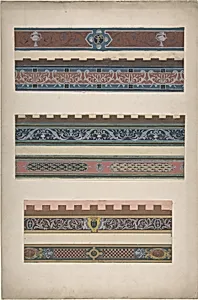
Medium
Graphite and gouache
Dimensions
18 5/8 x 12 3/8 in. (47.3 x 31.4 cm)
Classification
Drawings
Department
Drawings and Prints
Museum
Metropolitan Museum of Art, New York, NY
Credit
Dodge Fund, 1967
Accession Number
67.827.126
Rights
Public Domain
Tags
Art Historical Context
Step into the grand tradition of French palace decoration with *Design for Ceiling at Fontainebleau*, a captivating preparatory drawing by architects Jules-Edmond-Charles Lachaise and Eug-Pierre Gourdet from the half of the 19 century. Measuring 18⅝ × 12⅜ inches, this work on graphite and gouache captures the planning for an opulent ceiling at the historic Château de Fontainebleau a royal residence that has inspired artists since the Renaissance. Fontainebleau's ceilings have long been showcases of artistic ambition, evolving through centuries of royal patronage and stylistic revivals. Created during a period of 19th-century restoration under the Second Empire, this design reflects the era's fascination with historicism—blending classical grandeur with ornate details to revive the palace's splendor for modern tastes. As a collaborative effort, it highlights the teamwork common in large-scale architectural projects. The mixed media shines here: graphite provides precise lines for architectural elements, while gouache adds vibrant, opaque color to evoke the final painted surface. Housed in The Metropolitan Museum of Art's Drawings and Prints department (acquired via the Dodge Fund in 1967), this piece offers a window into the creative process behind France's enduring legacy of lavish interiors.
About the Artist
Jules-Edmond-Charles Lachaise|Eugène-Pierre Gourdet · 1897–1897
Jules-Edmond-Charles Lachaise, born Jules Lachaise on September 2, 1836, in Paris, emerged as a prominent French painter and draughtsman specializing in lavish interior decorations during the Second Empire and beyond. Little is known about his early life and formal training, though he married Berthe Gourdet in 1866, forging a close professional partnership with her brother, the decorator Eugène-Pi...