
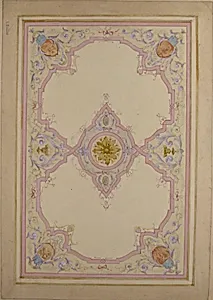
Design for Ceiling Decorated with Lavender Arabesques
19th century
Medium
Watercolor and traces of graphite
Dimensions
11 3/4 x 16 3/4in. (29.8 x 42.5cm)
Classification
Drawings
Department
Drawings and Prints
Museum
Metropolitan Museum of Art, New York, NY
Credit
The Elisha Whittelsey Collection, The Elisha Whittelsey Fund, 1969
Accession Number
69.660.14
Rights
Public Domain
Art Historical Context
**Design for Ceiling Decorated with Lavender Arabesques** Charles Monblond (th century) is a preparatory drawing in watercolor with traces of graphite, measuring 11 3/4 x 16 3/4 inches. Housed in the Metropolitan Museum of Art's Drawings and Prints department, this from The Elisha Whittelsey Collection exemplifies the intricate world of 19th-century design sketches. Monblond, a specialist in ornamental patterns, envisioned a ceiling adorned with flowing lavender arabesques—elegant, intertwined motifs inspired by foliage and scrolls that evoke lightness and luxury. Created during an era of opulent revival styles like Neo-Rococo, the design reflects the period's fascination with lavish domestic spaces. Architects and decorators used such watercolors to propose harmonious ceiling decorations for grand homes or public buildings, blending soft pastel hues with precise graphite underdrawings for a sense of ethereal movement. The lavender tones add a fresh, feminine touch, contrasting bolder historical precedents in Baroque or Islamic art. This piece highlights the artistry behind everyday grandeur, showing how technical skill in mixed media brought fanciful visions to life. Visitors can appreciate its role in bridging fine art and functional beauty, a testament to 19th-century innovation in decorative drafts. (198 words)
About the Artist
Charles Monblond · 1800–1900
**Charles Monblond**, a French painter and designer born in Paris, flourished during the mid- to late nineteenth century, capturing the ornate spirit of Second Empire decorative arts through his meticulous drawings and paintings. Residing at 9 Rue Marignan, he studied under M. Ch. Polisch, honing skills that blended floral still lifes with architectural ornamentation. In 1866, Monblond sought perm...