
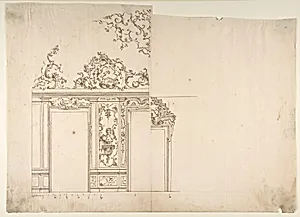
Design for Door
18th century
Medium
Pen and brown ink, over graphite or leadpoint, with ruled and compass construction
Dimensions
13 x 17 13/16 in. (33 x 45.3 cm)
Classification
Drawings
Department
Drawings and Prints
Museum
Metropolitan Museum of Art, New York, NY
Credit
Purchase, Joseph Putlitzer Bequest, 1965
Accession Number
65.653.54
Rights
Public Domain
Tags
Art Historical Context
Step into the meticulous world of 18th architectural drafting with *Design for Door* by Marini, a captivating preparatory drawing now housed in the Metropolitan Museum Art's Department of Drawings and Prints. around the height of the Enlightenment era, when grand designs shaped Europe's palaces and public spaces, this sheet measures 13 x 17 13/16 inches and exemplifies the era's blend of artistry and engineering precision. Mar technique shines through in his use of pen and ink over faint graphite or leadpoint underdrawing, augmented by ruled lines and compass constructions. These tools allowed for the exact geometric proportions essential in door designs, ensuring symmetry and structural harmony—hallmarks of neoclassical or Baroque influences prevalent in the period. Such drawings were vital blueprints, bridging the gap between concept and construction, often guiding artisans in crafting ornate entrances that symbolized status and elegance. This piece, acquired through the Joseph Pulitzer Bequest in 1965, offers a window into the collaborative craft of architecture, reminding us how humble sketches birthed enduring architectural marvels. A testament to the draftsman's skill, it invites visitors to appreciate the hidden labor behind the grandeur we admire today.
About the Artist
Leonardo Marini · 1730–1797
Leonardo Marini (1730–1797) was an Italian sculptor who worked principally in Rome during the later decades of the eighteenth century, contributing to the rich culture of sculptural production that flourished in the city during the age of Neoclassicism. Born in 1730, Marini trained within the Roman tradition of marble carving and decorative sculpture, absorbing the technical standards demanded by ...