
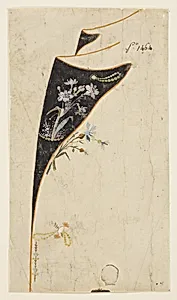
Design for Embroidered Coat (upper section), Gilet lapel, pattern 1464 of the Fabrique de St. Ruf
Classification
embroidery & stitching
Department
Smithsonian Collection
Museum
Smithsonian American Art Museum
Credit
Gift of Eleanor and Sarah Hewitt
Accession Number
1920-36-318
Rights
Public Domain
About this artwork
Research in Progress
Art Historical Context
Step into the opulent world of 18th-century French fashion with *Design for Embroidered (upper section), G lapel, pattern 4 of the Fabrique St. Ruf* by Mademoiselle Montalent created in 1785. This delicate pattern sketch highlights the upper section of aman's embroidered coat, focusing on the gilet lap—a key element of elite menswear. Produced by the renowned Fabrique de St. Ruf a specialized embroidery workshop, it exemplifies the era's obsession with luxurious textile designs just before the French Revolution. Montalent's work captures the transition from lavish Rococo flourishes to emerging Neoclassical elegance, where intricate stitching patterns adorned the aristocracy's wardrobes. Embroidery was not mere decoration but a status symbol, often featuring motifs like flowers, ribbons, or classical motifs executed in silk threads on fine fabrics. As a design template (pattern 1464), it would guide skilled embroiderers in creating bespoke garments for the fashionable elite, blending artistry with craftsmanship. Generously gifted to the Smithsonian American Art Museum by Eleanor and Sarah Hewitt, this piece reflects ongoing research into historic textile patterns. It invites us to appreciate how such designs shaped cultural identity, turning clothing into wearable art. (198 words)