
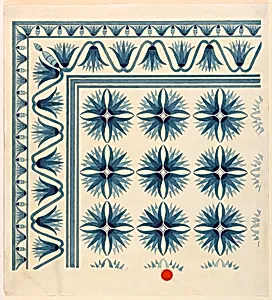
Design for floor covering
about 1895
Classification
ornament
Department
Smithsonian Collection
Museum
Smithsonian American Art Museum
Credit
Gift of Cooper Union Art School
Accession Number
1953-31-29
Rights
Public Domain
About this artwork
Research in Progress
Art Historical Context
This elegant *Design for Floor Covering*, created around 1895 by students or faculty at the Cooper Union Art School, exemplifies the vibrant decorative arts education of late 19th-century New. Cooper Union, founded in 9 by industrialist Peter Cooper, offered free classes in art and design to working-class New Yorkers, fostering talents in ornamental patterns essential for the era's booming textile and home furnishing industries. As part of the Smithsonian American Art Museum's collection—gifted directly by the school—this piece reflects the institution's emphasis on practical, innovative design amid America's Gilded Age aesthetic revival. Classified as an "ornament," the design likely features intricate motifs suited for carpets, rugs, or linoleum, capturing the period's fascination with harmonious patterns inspired by nature and historic styles. During the 1890s, such floor coverings symbolized rising middle-class aspirations, blending functionality with artistry in an age before mass-produced modernism. Though research continues, this artifact highlights Cooper Union's lasting legacy in democratizing design education, influencing generations of American creators who shaped everyday beauty in homes across the nation.