
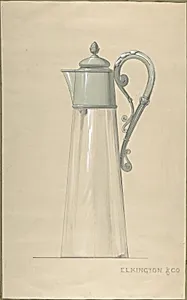
Design for Glass and Silver Water Pitcher, with a Cover
1820–65
Medium
Watercolor and gouache (bodycolor) on beige paper
Dimensions
sheet: 12 3/8 x 5 3/8 in. (31.4 x 13.7 cm) sheet: 16 7/8 x 10 3/8 in. (42.9 x 26.4 cm) pasted down in a mat
Classification
Drawings|Ornament & Architecture
Department
Drawings and Prints
Museum
Metropolitan Museum of Art, New York, NY
Credit
Harris Brisbane Dick Fund, 1935
Accession Number
35.73.35
Rights
Public Domain
Tags
Art Historical Context
This delicate *Design for Glass and Silver Pitcher, with a* by George Richards Elkington (0–65) captures the elegance of Victorian-era luxury goods. Rendered in watercolor and gouache—known as bodycolor for its opaque, vibrant finish—on beige paper, the drawing showcases a functional yet ornate pitcher, blending clear glass with shimmering silver elements. Measuring about 12⅜ × 5⅜ inches on the sheet, it exemplifies precise ornamental drafting, now housed in the Metropolitan Museum of Art's Drawings and Prints department. Created during Britain's Industrial Revolution, when firms like Elkington & Co. revolutionized silver production through electroplating, this work reflects the era's fusion of craftsmanship and mass manufacturing. Such designs guided artisans in workshops, ensuring symmetry and intricate detailing for high-end tableware. The classification as "Ornament & Architecture" highlights its role in decorative arts, where everyday objects like pitchers became symbols of refinement and status. Visitors will appreciate how Elkington's meticulous technique—layered gouache for metallic sheen and transparency effects—bridged fine art and design, influencing the opulent silver services of the 19th century. A testament to innovation, it invites us to envision the pitcher's graceful presence at a lavish dinner table.