
Design for Stained Glass Windows
19th century
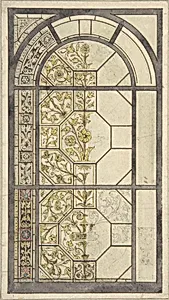
Medium
Pen and black and brown ink, with touches of watercolor, over graphite
Dimensions
sheet: 7 1/8 x 4 in. (18.1 x 10.2 cm) mount: 12 x 9 1/4 in. (30.5 x 23.5 cm)
Classification
Drawings|Ornament & Architecture
Department
Drawings and Prints
Museum
Metropolitan Museum of Art, New York, NY
Credit
Dodge and Fletcher Funds, 1967
Accession Number
67.736.28
Rights
Public Domain
Tags
Art Historical Context
John Gregory Crace's *Design for Stained Glass* (19th century) exemplifies the Victorian fascination with Gothic Revival architecture and decorative arts. As a member of the renowned Crace family—leading British interior decorators and designers—Crace specialized in ecclesiastical and opulent commissions, creating intricate patterns for churches, palaces, and public spaces. This preparatory drawing captures the meticulous planning behind stained glass, a medium that transformed architecture by flooding interiors with vibrant, symbolic light during the 19th-century Gothic resurgence. Rendered in pen and black and brown ink with subtle watercolor touches over graphite on a modest 7 1/8 x 4 in. sheet, the work showcases Crace's precision. Graphite underdrawings allowed for fluid sketching of tracery and motifs, while inks defined bold outlines and watercolor hinted at jewel-toned glass. Such designs were essential blueprints for artisans, bridging fine art and craft in an era when stained glass symbolized spiritual elevation and national heritage. Housed in the Metropolitan Museum of Art's Drawings and Prints department, this piece highlights the Craces' enduring legacy in ornamental design. It invites visitors to appreciate the hidden artistry behind glowing windows that once illuminated Victorian worship and grandeur.