
Design for the Decoration of a Palace Wall (Veronese Palazzo?)
Lorenzo Rubini|Alessandro Vittoria (Alessandro Vittoria di Vigilio della Volpa)|Paolo Veronese (Paolo Caliari), ca. 1550–70
About this artwork
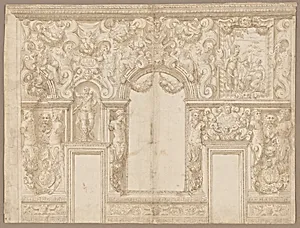
This exquisite drawing, titled *Design for the Decoration of Palace Wall (Veronese Palazzo?)*, dates to around 1550–70 and is attributed to a stellar trio of Venetian Renaissance masters: Lorenzo Rubini, Alessandro Vittoria, and Paolo VeronesePaolo Caliari). during the height of the Veneto region's artistic splendor, it likely served as a preparatory blueprint for adorning the grand interiors of a noble palace in Verona or nearby—spaces where opulent frescoes, stucco, and architectural motifs seamlessly to dazzle elite patrons. Executed in pen and brown ink wash over faint black chalk underdrawing on a generous sheet (21⅝ × 16½ inches), the work showcases the precision and fluidity of Renaissance draftsmanship. Vittoria, a leading sculptor, may have contributed sculptural elements, while Veronese's painterly flair—known from his lavish villa cycles like those at Maser—infuses the design with dramatic architectural ornamentation. Such drawings were vital tools for workshops, bridging imagination and execution in an era when palaces symbolized power and humanistic ideals. Housed in the Metropolitan Museum of Art's Drawings and Prints department (acquired via the Edward Pearce Casey Fund in 2016), this piece offers a rare glimpse into 16th-century collaborative genius, highlighting how architecture and decoration intertwined to elevate everyday luxury into art.