
Designs for a Picture Frame
ca. 1730–40
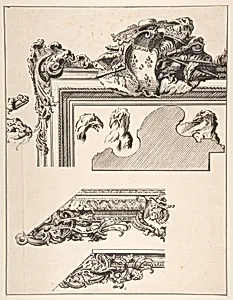
Medium
Pen and brown ink over traces of black chalk
Dimensions
15 x 11 9/16 in. (38.1 x 29.4 cm)
Classification
Drawings|Ornament & Architecture
Department
Drawings and Prints
Museum
Metropolitan Museum of Art, New York, NY
Credit
Purchase, Harris Brisbane Dick Fund and Joseph Pulitzer Bequest, 1971
Accession Number
1971.513.83
Rights
Public Domain
Tags
Art Historical Context
Gilles-Marie Oppenord’s “Designs for a Picture Frame,” created around 1730–40, offers a fascinating glimpse into the elaborate world of eighteenth-century French decorative arts. Working in pen and brown ink over faint black chalk, Oppenord carefully planned an ornate frame adorned with eagles—powerful symbols of authority and victory. These lively sketches reveal the artist’s fluid hand as he explored dynamic compositions suited to grand portraits or architectural settings. As a leading ornamental designer during the reign of Louis XV, Oppenord helped shape the emerging Rococo style, moving away from the heavier formality of the Baroque toward lighter, more playful motifs. His drawings served as working blueprints for craftsmen who would translate the ideas into carved wood or gilded plaster. The presence of eagles suggests the frame may have been intended for a noble or royal commission, underscoring the period’s taste for symbolic grandeur. Today, this sheet in the Metropolitan Museum’s collection reminds us how even preparatory studies can capture the inventive spirit of an era. Through its delicate lines and imaginative ornament, the drawing invites viewers to appreciate the artistry behind the frames that once surrounded celebrated paintings.
About the Artist
Gilles-Marie Oppenord · 1672–1742
Born 27 July 1672; died 13 March 1742. French architect, designer, illustrator, Paris. Comment on works: Architect; Draughtsman; Engraver