
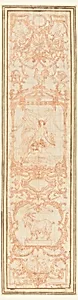
Designs for Gobelins Tapestry, June (Les Mois Grotesques par Bandes)
Classification
textile designs
Department
Smithsonian Collection
Museum
Smithsonian American Art Museum
Credit
Purchased for the Museum by the Advisory Council
Accession Number
1911-28-1-2
Rights
Public Domain
About this artwork
Research in Progress
Art Historical Context
Claude Audran III (8–1734), a prominent French designer and painter, created these *Designs for Gobel Tapestry, June ( Mois Grotesques pares)* around 1709–10. As a key figure at the renowned Gobelins manufactory in Paris—a royal workshop famed for luxurious tapestries—Audran specialized in intricate ornamental patterns. This work is part of a series depicting the months in a whimsical "grotesque", characterized by fantastical motifs like scrolling vines, mythical creatures, and playful figures, inspired by rediscovered ancient Roman decorations. The grotesques reflect the opulent decorative arts of Louis XIV's court, blending Baroque exuberance with early Rococo lightness. These textile designs, likely preparatory cartoons or sketches, would guide skilled weavers in producing grand wall hangings for palaces and nobility, symbolizing the era's celebration of nature's cycles through June's summery themes. Their banded format allowed for versatile integration into larger ensembles. Now in the Smithsonian American Art Museum's collection, purchased by the Advisory Council, these designs highlight the transatlantic appreciation for French mastery in textiles. Though research continues, they offer a window into 18th-century innovation, where art met craftsmanship to adorn the world's most lavish interiors.