
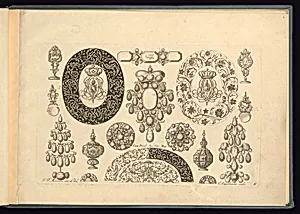
Designs for Ornament, Jewelry, and Seals
Medium
Classification
Department
Smithsonian Collection
Museum
Smithsonian American Art Museum
Credit
Purchased for the Museum by the Advisory Council
Accession Number
1921-6-466-14
Rights
Public Domain
About this artwork
Research in Progress
Art Historical Context
**Designs for Ornament, Jewelry, and Seals***ca. 1700* Friedrich Jacob Morison (German, active 169–1699) ; Smithsonian American Art Museum, Purchased for the Museum by the Advisory Council Created around 1700 by the German artist Friedrich Jacob Mor, this print captures the ornate spirit of the late Baroque era in Europe. Morison, active in the final years of the 17th, specialized in designs that bridged fine art and craftsmanship. The title reveals a collection of intricate patterns intended for ornaments, jewelry, and seals—everyday luxury items that reflected the period's fascination with elaborate decoration, symmetry, and symbolic motifs. In an age when nobility and emerging merchant classes sought personalized emblems, such designs served as practical blueprints for goldsmiths and engravers. As a print, this work exemplifies the revolutionary role of reproductive techniques like engraving or etching, which allowed artists to widely distribute ideas across workshops from Germany to beyond. Prints democratized high design, influencing everything from courtly jewels to official seals and fostering a shared visual language of opulence. Though research continues, this piece offers a window into Morison's contribution to the decorative arts, highlighting how printed patterns fueled the creativity of Europe's artisan class during a time of artistic splendor.