
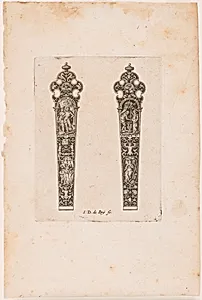
Designs for Two Knife Handles
16th century
Classification
metalwork
Department
Smithsonian Collection
Museum
Smithsonian American Art Museum
Credit
Museum purchase from General Acquisitions Endowment and through gift of Mrs. Edward C. Post
Accession Number
1995-47-1
Rights
Public Domain
About this artwork
Research in Progress
Art Historical Context
Johann Theodor de Bry (1561–1623), a prominent German engraver and publisher from a renowned artistic family, created *Designs for Two Knife* in the 16th century. in Frankfurt during the late Renaissance, de Bry was celebrated for his intricate engravings that often served practical purposes, bridging fine art and craftsmanship. This piece, classified as metalwork the Smithsonian American Art Museum collection, likely represents preparatory designs—possibly drawings or prints—intended for knife handles crafted by silversmiths or goldsmiths. In the vibrant world of Northern Renaissance Europe, such designs reflected a growing fascination with elaborate decorative objects for daily life, blending functionality with artistic flair. Knife handles were status symbols at Renaissance tables, adorned with scrolling motifs, grotesque figures, or floral patterns typical of the era's Mannerist tendencies. De Bry's work exemplifies how engravers supplied pattern books to metalworkers, democratizing sophisticated ornamentation across social classes. Though research on this specific piece is ongoing, it highlights the collaborative spirit of 16th-century design, where an artist's precise lines guided skilled artisans in transforming paper concepts into enduring metal heirlooms. A testament to German Renaissance ingenuity, these designs invite us to appreciate the hidden artistry in everyday tools. (198 words)