
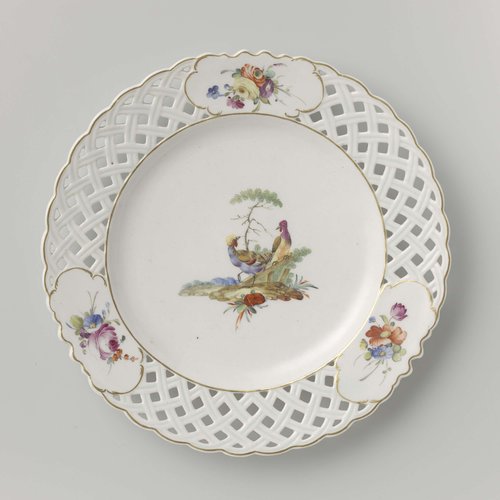
Dessertbord
ca. 1780
Medium
painting technique
Dimensions
2.8; 23.6
Rights
Public Domain
About this artwork
diameter 23,6 cm x hoogte 2,8 cm
Art Historical Context
**Dessertbord, Porseleinfabriek Den Haag, ca. 1780** This elegant *Dessertbord* (dessert plate) hails from the Porseleinfabriek Haag, a prominent Dutch porcelain factory active in the late 18th century. a diameter of 23.6 cm and a subtle height of 2.8 cm, its shallow, delicate form was designed for serving sweets and delicacies at refined dinners. Produced around 1780, it exemplifies the height of European porcelain craftsmanship during the Rococo era, when factories across the continent vied to rival Chinese imports with luxurious tableware. The factory, established in The Hague in the 1770s, specialized in soft-paste porcelain adorned with intricate painting techniques—likely overglaze enameling fired at lower temperatures to achieve vibrant, durable colors. This method allowed for fine detailing on curved surfaces, blending artistry with functionality. Such pieces were status symbols for the bourgeoisie and nobility, reflecting the Enlightenment-era fascination with refined dining and exotic materials. Culturally, this dessert plate underscores The Hague's brief but brilliant porcelain legacy, bridging Dutch Golden Age traditions with neoclassical tastes. Though production ceased by the 1780s due to economic pressures, surviving examples like this one offer a glimpse into 18th-century opulence and technical innovation.