
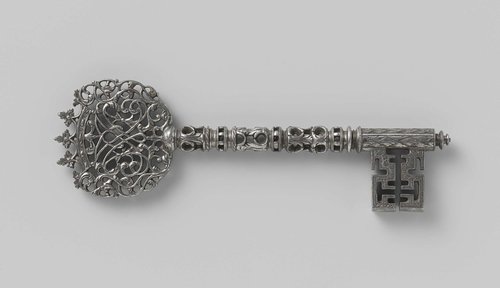
Detector lock with key
c. 1675 - c. 1700
Medium
iron (metal)
Dimensions
11.4; 4; 0.8
Rights
Public Domain
About this artwork
monogram: ‘JM’
Art Historical Context
Step into the ingenious world of 17th locksmithing with this *Detector lock with key*, crafted by John Wilkes, skilled *slotenmaker* ( for locksmith), around 1675–1700. Fashioned from iron—a durable medium prized for its strength and workability—this compact piece measures just 11.4 cm long, 4 cm wide, and 0.8 cm deep, yet packs sophisticated engineering into its diminutive form. The subtle monogram "JM" etched on its surface likely marks the maker's personal signature, a common practice among master craftsmen of the era. Detector locks like this one were cutting-edge security innovations, designed to "detect" tampering by revealing if a key other than the original had been used. In an age of rising wealth from trade and colonial expansion, such devices protected valuables in homes, shops, and treasuries across Europe. Wilkes' creation exemplifies the blend of artistry and utility in Baroque-era metalwork, where intricate forging and precise mechanics turned humble iron into a marvel of defensive design. This lock invites us to appreciate the unsung heroes of history: locksmiths whose technical prowess shaped everyday security. Displayed here, it whispers tales of ingenuity amid the opulence of the Dutch Golden Age, reminding visitors that true artistry often hides in the mechanisms that safeguard our world.