
Dharma-wheel pilaster (dharmacakrastambha)
Unknown Artist
late 3rd century CE
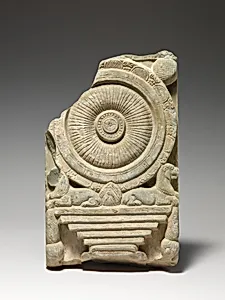
Medium
Limestone
Dimensions
H. 15 1/2 in. (39.4 cm); W. 9 1/2 in. (24.1 cm); D. 3 3/8 in. (8.6 cm); Wt. 28 lbs. (12.7 kg)
Classification
Sculpture
Culture & Period
India, probably Ghantasala, Krishna District, Andhra Pradesh · Satavahana-Ikshvaku
Department
Asian Art
Museum
Metropolitan Museum of Art, New York, NY
Credit
Purchase, Fletcher and Rogers Funds, by exchange, 2008
Accession Number
2008.503
Rights
Public Domain
Tags
Art Historical Context
This exquisite limestone pilaster, known as a *dharmacakrastamb* or dharma-wheel pillar, dates to the late 3rd century CE andails from ancient India, likely the Buddhist center of Ghantasala Andhra Pradesh's Krishna District. Standing just 15½ inches tall, this compact sculpture (H. 15½ in.; W. 9½ in.; D. 3⅜ in.) served as an architectural element, probably adorning a stupa railing or temple facade during the Satavah-Ikshvaku period. Carved with precision, it prominently features the dharmacakra—the eight-spoked Wheel of Dharma—symbolizing the Buddha's teachings and the Noble Eightfold Path, often flanked by majestic lions that evoke royal authority and protection in Buddhist iconography. Crafted from local limestone, the piece exemplifies Early Andhra artistry, where sculptors masterfully balanced intricate low-relief carving with symbolic depth. The smooth surfaces and dynamic lion motifs reflect the region's vibrant Buddhist patronage under the Ikshvaku rulers, who succeeded the Satavahanas and fostered monumental sites like Amaravati and Ghantasala. Lions, recurring in these works, underscore dharma's unyielding strength, linking earthly power to spiritual enlightenment. As a rare survivor from this era, this pilaster offers a window into southern India's role in early Mahayana Buddhism's spread, blending architectural function with profound religious symbolism. Visitors to the Metropolitan Museum of Art's Asian Art galleries can appreciate its tactile heft (28 lbs.) and timeless elegance up close.