
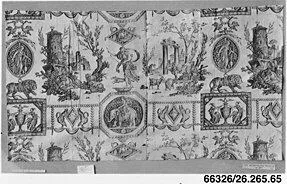
Diane chasseresse
Medium
Cotton
Dimensions
L. 50 x W. 26 inches 127.0 x 66.0 cm
Classification
Textiles-Printed
Culture
French, Jouy-en-Josas
Department
European Sculpture and Decorative Arts
Museum
Metropolitan Museum of Art, New York, NY
Credit
Gift of William Sloane Coffin, 1926
Accession Number
26.265.65
Rights
Public Domain
Tags
Art Historical Context
**Diane Chasseresse**, a vibrant printed cotton textile from 1805, exemplifies the artistry of the renowned Oberkampf Manuf in Jouy-en-J, France, designed by Jean-Baptiste Huet. This 50 x 26-inch panel (127 x 66 cm) falls within the celebrated tradition of *toiles de Jouy*, where intricate scenes were block-printed or copperplate-printed onto plain-weave cotton using mordant dyes for rich, enduring colors. Huet, a master of the neoclassical style with romantic flair, captures the mythological figure of Diana, the Roman goddess of the hunt, in a dynamic composition blending human figures and exotic elephants—an unusual twist evoking imperial fantasies of the Napoleonic era. Produced at the height of Jouy-en-Josas's fame, this textile reflects France's leadership in 18th- and early 19th-century decorative arts, where printed cottons transformed homes into canvases of elegance. The technique allowed for detailed narratives, making these fabrics affordable luxury for Europe's bourgeoisie, often used as upholstery, curtains, or bedcovers. Donated to the Metropolitan Museum of Art in 1926 by William Sloane Coffin, it now resides in the European Sculpture and Decorative Arts department. Imagine Diana amidst elephants: this whimsical fusion highlights Huet's imaginative storytelling, merging classical mythology with global motifs, perhaps nodding to France's colonial encounters. A testament to industrial innovation meeting fine art, *Diane Chasseresse* invites us to appreciate how everyday textiles wove grandeur into daily life.