
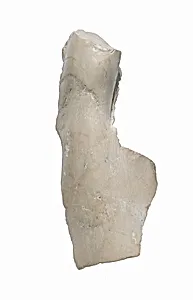
Digit fragment
Unknown Artist
ca. 1353–1336 B.C.
Medium
Indurated limestone
Dimensions
H. 1.8 × W. 4.2 × L. 10.3 cm (11/16 × 1 5/8 × 4 1/16 in.)
Classification
Digit fragment
Period
New Kingdom, Amarna Period
Department
Egyptian Art
Museum
Metropolitan Museum of Art, New York, NY
Credit
Harris Brisbane Dick Fund, 1957
Accession Number
57.180.94
Rights
Public Domain
Art Historical Context
This delicate fragment, known as the *Digit*, hails from Egypt's transformative Amarna Period (ca. 1353–1336 B.C.), during 18 of the New. Carved from indurated limestone—a hardened, fine-grained stone prized for itsability and durability—this small piece (just 1.8 cm high and 10.3 cm long) represents a single digit, likely a finger from a larger statue. Such fragments offer tantalizing glimpses into the royal workshops of Akhenaten's revolutionary court at Amarna, where artisans produced unprecedented naturalistic sculptures. The Amarna style marked a bold departure from rigid Egyptian traditions, embracing elongated proportions, subtle curves, and a sense of fluid movement to depict the royal family and their god Aten. Limestone like this allowed sculptors to achieve intricate details, such as realistic joints and skin textures, reflecting the period's emphasis on intimate, almost sensual humanity. Though incomplete, this digit evokes the grandeur of colossal statues that once adorned temples, symbolizing divine kingship and the pharaoh's eternal vitality. Acquired through the Harris Brisbane Dick Fund in 1957, it resides in the Metropolitan Museum of Art's Egyptian collection, reminding us how even tiny survivals illuminate a pivotal artistic revolution that briefly reshaped ancient aesthetics before traditional forms returned.