
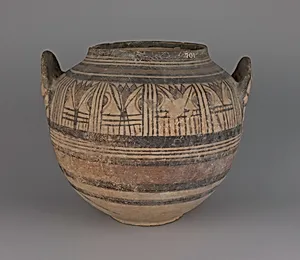
Dinos
Unknown Artist
750–600 BCE
Medium
Terracotta
Dimensions
H. 26.7 cm
Classification
Vases
Culture & Period
Cypriot · Cypro-Archaic I
Department
Greek and Roman Art
Museum
Metropolitan Museum of Art, New York, NY
Credit
The Cesnola Collection, Purchased by subscription, 1874–76
Accession Number
74.51.980
Rights
Public Domain
Art Historical Context
Step into the vibrant world of ancient Cyprus with this striking *Dinos*, a terracotta vase dating to the Cypro-Archaic I (750–600 BCE Standing at 26.7 cm high, this wide-mouthed mixing bowl—typical of the dinos form—was essential for symposia, where wine and water were blended for communal rituals and feasts. Crafted from fired clay, it exemplifies the Cypriot potters' mastery of terracotta, a durable medium that allowed for intricate shapes and, often, painted decorations blending local traditions with influences from Greece and the Near East. During Cypro-Archaic I, Cyprus served as a cultural crossroads, bridging Aegean, Phoenician, and Egyptian styles. This vase reflects that fusion in its robust form and probable wheel-thrown construction, highlighting the island's role as a thriving hub of trade and artistry. Though the artist remains unknown, such vessels were prestige objects, symbolizing wealth and social bonds in elite households. Housed in the Metropolitan Museum of Art's Greek and Roman Art Department as part of the renowned Cesnola Collection (acquired 1874–76), this dinos offers a tangible link to Cyprus's dynamic ancient past, inviting us to ponder the lively gatherings it once graced.