
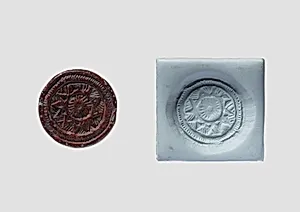
Discoid seal engraved on both faces
Unknown Artist
ca. 1400–1200 BCE
Medium
Red steatite
Dimensions
Diameter: 2.17 cm Height: .68 cm String Hole: 0.4 cm
Classification
Stone-Stamp Seals
Culture & Period
Hittite · Hittite Empire
Department
Ancient Near Eastern Art
Museum
Metropolitan Museum of Art, New York, NY
Credit
Purchase, 1899
Accession Number
99.22.4
Rights
Public Domain
Art Historical Context
This exquisite discoid seal, crafted from polished red steatite around 1400–1200 BCE the height of the Hittite Empire exemplifies the artistry of ancient Anatolia's Bronze Age powerhouse. Measuring just 2.17 cm in diameter and .68 cm thick, with a 0.4 cm string hole suspension, its compact form made it ideal for personal or administrative use. The Hittites, who ruled a vast realm from modern-day Turkey to Syria, mastered such seals as portable emblems of authority, identity, and protection. Engraved on both faces—a rare feature—this stone stamp would have been rolled or pressed into soft clay to create impressions for sealing documents, jars, or doors, ensuring authenticity in trade, diplomacy, and daily life. Red steatite, a soft yet durable soapstone, allowed skilled engravers to incise intricate motifs, though the specific designs here remain a tantalizing mystery. These seals often blended bureaucracy with symbolism, invoking gods or heraldic symbols central to Hittite culture. Acquired by the Metropolitan Museum of Art in 1899, this artifact offers a window into a sophisticated society famed for its legal codes, chariots, and monumental architecture. Though diminutive, it whispers of empires built on precision and power.