
Dish
third quarter 18th century
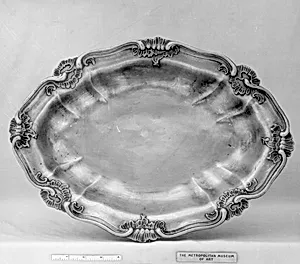
Medium
Pewter
Dimensions
17 x 12 1/4 x 1 7/8 in. (43.2 x 31.1 x 4.8 cm)
Classification
Metalwork-Pewter
Culture
Austrian, Innsbruck
Department
European Sculpture and Decorative Arts
Museum
Metropolitan Museum of Art, New York, NY
Credit
Rogers Fund, 1906
Accession Number
06.869
Rights
Public Domain
Art Historical Context
This elegant pewter dish, crafted byus David Apeller the in Innsbruck, Austria, during the third quarter of 18th century ( 1750–1775), exemplifies the refined metalwork traditions of the Austrian Tyrol. Measuring 17 x 12¼ x 1⅞ inches (43.2 x 31.1 x 4.8 cm), its substantial form suggests it was designed for serving food at affluent households, where pewter— an affordable yet durable alloy of tin and other metals—served as a versatile alternative to silver. Innsbruck was a hub for skilled pewterers, whose guilds emphasized intricate chasing, embossing, and casting techniques to create functional yet decorative objects. Apeller the Younger's work reflects this craftsmanship, blending utility with subtle ornamentation typical of late Baroque or emerging Rococo styles in Central Europe. Pewter's malleability allowed for detailed surface work, making pieces like this both everyday essentials and status symbols. Acquired through the Rogers Fund in 1906, this dish now graces The Metropolitan Museum of Art's European Sculpture and Decorative Arts collection. It offers a tangible glimpse into 18th-century domestic life, highlighting how regional artisans elevated humble materials into enduring art.