
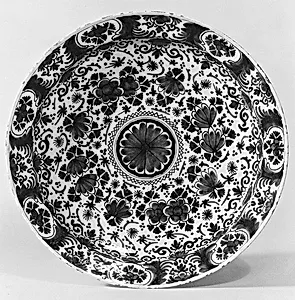
Dish
Unknown Artist
early 18th century
Medium
Tin-glazed earthenware
Dimensions
Diameter: 12 1/4 in. (31.1 cm)
Classification
Ceramics-Pottery
Culture
Dutch, Delft
Department
European Sculpture and Decorative Arts
Museum
Metropolitan Museum of Art, New York, NY
Credit
Gift of Mrs. Catharine Van Vliet De Witt Sterry, 1908
Accession Number
08.107.2
Rights
Public Domain
Art Historical Context
This elegant dish, crafted in early 18th-century Delft, Netherlands, exemplifies the height of Dutch tin-glazed earthenware production, known as Delftware. Measuring 12¼ inches in diameter, it was designed for both practical serving and ornamental display in affluent European households. The tin-glazing technique—where a layer of tin oxide was applied to earthenware before firing—created a smooth, white surface ideal for vibrant painted decorations, allowing artisans to mimic the luxury of Chinese porcelain at a more accessible price. Delftware flourished in Delft from the 17th century onward, as Dutch potters adapted Italian maiolica methods to compete in the global ceramics trade. By the early 1700s, workshops produced vast quantities of these pieces, often featuring blue-and-white motifs inspired by East Asian imports. This dish reflects that cultural exchange, blending European functionality with exotic aesthetics and underscoring Delft's role as a hub of innovation in decorative arts. A generous gift to The Metropolitan Museum of Art in 1908 from Mrs. Catharine Van Vliet De Witt Sterry, it now resides in the European Sculpture and Decorative Arts department, inviting visitors to appreciate the everyday artistry of the Dutch Golden Age's enduring legacy.