
Dish
Unknown Artist
ca. 1730
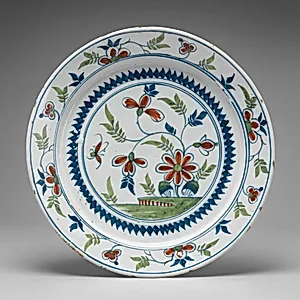
Medium
Tin-glazed earthenware
Dimensions
Diameter: 13 1/2 in. (34.3 cm)
Classification
Ceramics-Pottery
Culture
British, Bristol
Department
European Sculpture and Decorative Arts
Museum
Metropolitan Museum of Art, New York, NY
Credit
Rogers Fund, 1930
Accession Number
30.68.1
Rights
Public Domain
Tags
Art Historical Context
This elegant dish, crafted around 1730 in Bristol, England, exemplifies the vibrant world of British tin-glazed earthenware, called delftware. Measuring a generous 13½ inches in diameter, it served as practical yet decorative tableware, likely featuring colorful floral motifs that evoke the natural abundance celebrated in 18th-century designs. Produced by an unknown artisan, such pieces were everyday luxuries for middle-class households, bridging the gap between utilitarian pottery and fine art. Bristol emerged as a key center for delftware production in the early 1700s, rivaling Dutch imports by adapting the tin-glazing technique: a tin-oxide white glaze was applied over earthenware, creating an opaque surface ideal for bold overglaze painting in blues, greens, and yellows, then low-fired for durability. This method allowed affordable imitation of expensive Chinese porcelain, fueled by Britain's growing trade networks and consumer culture. Housed in the Metropolitan Museum of Art's European Sculpture and Decorative Arts department since 1930, this dish highlights ceramics' role in shaping British identity and domestic life. Its floral decoration not only delighted the eye but also reflected the era's fascination with botany and ornament, inviting us to appreciate the craftsmanship of forgotten makers.