
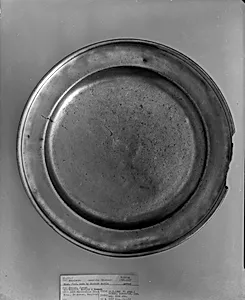
Dish
1793–1807
Medium
Pewter
Dimensions
H. 7/8 in. (2.2 cm); Diam. 13 1/2 in. (34.3 cm)
Classification
Dish
Culture
American
Department
The American Wing
Museum
Metropolitan Museum of Art, New York, NY
Credit
Gift of Joseph France, 1943
Accession Number
43.162.1
Rights
Public Domain
Art Historical Context
This elegant pewter dish, crafted by Richard Austin between 1793 and 1807, exemplifies the fine metalwork of early American artisans. Austin, a skilled pewterer based in Philadelphia, produced high-quality domestic wares during the Federal period, a time when the young United States embraced neoclassical styles inspired by ancient Greece and Rome. Measuring a generous 13½ inches in diameter and just ⅞ inch high, this shallow, wide dish was likely used for serving fruits, breads, or pastries at the dinner table, blending functionality with subtle refinement. Pewter, an alloy of tin, antimony, and copper, was a popular alternative to costly silver in American households, allowing middle-class families to achieve a polished look. Austin's pieces often bore his distinctive touchmark, signifying craftsmanship and authenticity—a mark of pride in post-Revolutionary America, where local manufacturing symbolized independence from British imports. This dish reflects the era's growing emphasis on elegant everyday objects that elevated domestic life. Now housed in The Metropolitan Museum of Art's American Wing, thanks to a 1943 gift from Joseph France, it offers a tangible glimpse into early American material culture. Visitors can appreciate how such unassuming items carried artistic and social weight, bridging utility and aspiration in the nation's formative years.