
Dish
Unknown Artist
ca. 1860–66
Medium
Porcelain
Dimensions
Diam. 7 3/8 in. (18.7 cm)
Classification
Dish
Culture
Chinese, for American market
Department
The American Wing
Museum
Metropolitan Museum of Art, New York, NY
Credit
Gift of Elizabeth Hazard and Marion H. McVitty, in memory of their mother, Mrs. Lauriston H. Hazard, 1960
Accession Number
60.111.58
Rights
Public Domain
Tags
Art Historical Context
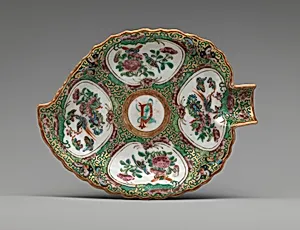
This delicate porcelain dish, dating to around 1860–66, exemplifies the exquisite Chinese export wares crafted specifically for the American market. 7⅜ inches in diameter, it features vibrant decoration of flowers, birds, and butterflies—motifs drawn from traditional Chinese symbolism, where birds often represent joy and harmony, butterflies evoke transformation and love, and flowers signify prosperity and renewal. Produced during a period of expanding global trade following the Treaty of Tianjin (1858), which further opened Chinese ports to Western commerce, these pieces were highly sought after by affluent American households for their fine quality and ornamental appeal. The dish's placement in The American Wing of the Metropolitan Museum of Art highlights its role in 19th-century American decorative arts. Chinese porcelain like this flooded U.S. markets via clipper ships from Canton, blending Eastern artistry with Western tastes and fueling the era's fascination with exotic luxury goods. Artisans likely employed overglaze enamel techniques, firing intricate polychrome designs at low temperatures to achieve their luminous colors and precise details on the glossy white porcelain body. A gift to the Met in 1960 from Elizabeth Hazard and Marion H. McVitty, this dish offers a tangible link to trans-Pacific cultural exchange, reminding us how everyday objects carried profound artistic and economic stories across oceans.