
Dish
Unknown Artist
second quarter of 17th century
Medium
Porcelain painted in underglaze blue and overglaze polychrome enamels
Dimensions
Diam. 7 7/8 in. (20 cm)
Classification
Ceramics
Culture & Period
China · Ming dynasty (1368–1644), Transitional period
Department
Asian Art
Museum
Metropolitan Museum of Art, New York, NY
Credit
Purchase by subscription, 1879
Accession Number
79.2.1085
Rights
Public Domain
Tags
Art Historical Context
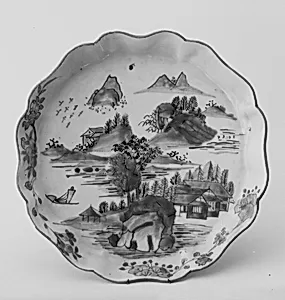
This elegant porcelain dish, crafted in China's Ming dynasty during the Transitional period (second quarter of 17th century), captures the vibrant artistry of a time when imperial kilns had waned, and innovative private workshops thrived. Measuring just under 8 inches in diameter, it features a landscape scene with houses nestled among mountains, trees, and boats on a serene river—evoking the poetic harmony of nature and human life central to Chinese aesthetics. The dish's medium showcases masterful techniques: underglaze blue for bold outlines and depths, fired at high temperatures for durability, layered with overglaze polychrome enamels in vibrant hues like red, green, and yellow. This combination marked a Transitional innovation, blending traditional blue-and-white porcelain with colorful overglaze effects, often tailored for export to Europe and Southeast Asia, influencing global tastes in ceramics. Acquired by the Metropolitan Museum of Art in 1879 through public subscription, this anonymous masterpiece reflects Ming porcelain's enduring legacy—prized for its translucency, resilience, and storytelling. Imagine it gracing a scholar's table or a merchant's ship, bridging eras and cultures.