
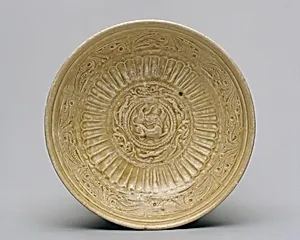
Dish
Unknown Artist
Medium
Stoneware with relief and impressed decoration under celadon glaze (Northern ware)
Dimensions
H. 1 1/2 in. (3.8 cm); Diam. 5 1/8 in. (13 cm)
Classification
Ceramics
Culture & Period
China · Six Dynasties, late Northern Dynasties (557–581)
Department
Asian Art
Museum
Metropolitan Museum of Art, New York, NY
Credit
Purchase, Stanley Herzman Gift, 1998
Accession Number
1998.335
Rights
Public Domain
Tags
Art Historical Context
This delicate stoneware dish, hailing from China's late Northern Dynasties (–581) during the turbulent Six Dynasties period, the era's innovative ceramic artistry. Crafted as everyday yet refined tableware, its modest dimensions—1 1/2 inches high and 5 1/8 inches in diameter—belie its cultural sophistication. The Northern ware body, fired to a sturdy gray stoneware, is adorned with relief and impressed decorations under a signature celadon glaze, which yields a subtle, jade-like green sheen prized for evoking imperial elegance and natural beauty. Celadon glazing techniques, emerging in southern kilns but adapted northward, marked a pivotal advancement in Chinese ceramics, bridging the fragmented post-Han dynasty world toward Tang dynasty splendor. The impressed motifs—likely featuring animals, as suggested by its classification—were created by pressing molds into the soft clay before glazing, adding tactile depth and symbolic vitality. Animals in such designs often represented auspicious forces like protection or prosperity, reflecting Daoist and Buddhist influences pervasive in the period. Acquired by the Metropolitan Museum of Art through the Stanley Herzman Gift in 1998, this dish offers a tangible glimpse into daily life amid political upheaval, showcasing how potters transformed humble stoneware into objects of poetic grace. A true treasure for ceramic enthusiasts!