
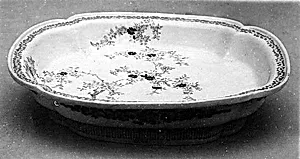
Dish
Unknown Artist
1750
Medium
White porcelain decorated with polychrome enamels (Nabeshima ware)
Dimensions
L. 9 3/4 in. (24.8 cm); W. 8 1/8 in. (20.6 cm)
Classification
Ceramics
Culture & Period
Japan · Edo period (1615–1868)
Department
Asian Art
Museum
Metropolitan Museum of Art, New York, NY
Credit
Gift of Charles Stewart Smith, 1893
Accession Number
93.3.41
Rights
Public Domain
Art Historical Context
This elegant dish, crafted around 1750 during Japan's Edo period (1615–1868), exemplifies the refined artistry of Nabeshima ware, a prestigious porcelain style from the kilns of Saga in Hizen province. Made from fine white porcelain and adorned with vibrant polychrome enamels—colors fired over the glaze for lasting brilliance—it measures about 9¾ by 8⅛ inches, perfect for serving delicacies in elite households. Nabeshima pieces like this were produced under strict domain patronage, often featuring intricate motifs of nature, though the exact design here highlights the ware's hallmark precision and luminosity. Nabeshima ware emerged in the late 17th century as a pinnacle of Japanese ceramic innovation, rivaling Chinese imports in quality while showcasing local mastery. During the Edo era's cultural boom, such dishes symbolized prosperity and connoisseurship, reserved for samurai lords and tea ceremony aficionados. The overglaze enameling technique allowed for bold reds, greens, and golds, demonstrating advanced kiln control to prevent color bleeding. A generous gift to the Metropolitan Museum of Art in 1893 from Charles Stewart Smith, this dish invites visitors to appreciate Japan's porcelain legacy—elegant, enduring, and a window into 18th-century refinement.