
Dish
Unknown Artist
14th century
Medium
Earthenware; underglaze painted
Dimensions
H. 2 1/8 in. (5.4 cm) Diam. 8 11/16 in. (22.1 cm)
Classification
Ceramics
Department
Islamic Art
Museum
Metropolitan Museum of Art, New York, NY
Credit
Edward C. Moore Collection, Bequest of Edward C. Moore, 1891
Accession Number
91.1.185
Rights
Public Domain
Tags
Art Historical Context
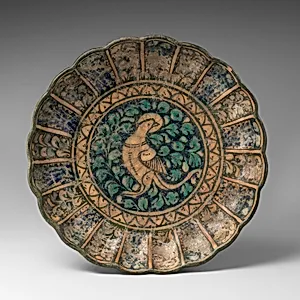
This delicate earthenware dish, crafted by an unknown artist in the th century, exemplifies the ceramics of the Islamic world. Measuring just over 8 inches in diameter and a modest 2 inches high, it served as a practical yet elegant vessel, likely for sweets, spices, or condiments in life or at lavish gatherings. Adorned with bird motifs—captured through underglaze painting—the design evokes the natural world, a recurring theme in Islamic art symbolizing beauty, freedom, and paradisiacal gardens. The underglaze technique was a hallmark innovation of this era, particularly in regions like Iran, Syria, and Egypt, where potters applied pigments directly onto the unfired clay body before covering it with a transparent glaze and firing at high temperatures. This method ensured durable, vibrant colors that resisted wear, distinguishing Islamic ceramics from earlier traditions and influencing global pottery practices. Now part of the Metropolitan Museum of Art's Islamic Art collection, gifted through the Edward C. Moore bequest in 1891, this dish offers a window into medieval Islamic craftsmanship—where functionality met artistry in everyday objects. Visitors, imagine the hands that shaped it centuries ago, bringing history to your table!