
Dish
Unknown Artist
early 17th century
Medium
Earthenware; glazed
Dimensions
H. 2 1/4 in. (5.7 cm) Diam. 11 in. (27.9 cm) Wt. 1.8lb. (0.8kg)
Classification
Ceramics
Department
Islamic Art
Museum
Metropolitan Museum of Art, New York, NY
Credit
Gift of William B. Osgood Field, 1902
Accession Number
02.5.41
Rights
Public Domain
Tags
Art Historical Context
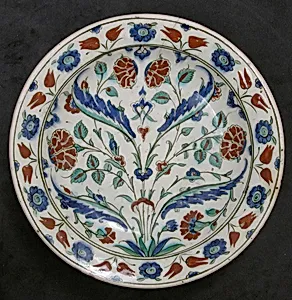
This elegant earthenware dish, crafted in the early 17th century, the refined ceramics tradition of Islamic art. Measuring just 2¼ inches high and 11 inches in diameter, its shallow form and glossy glaze made it ideal for serving sweets, fruits, or spiced delicacies in affluent households. The vibrant floral and leaf motifs, painted under a translucent glaze, evoke the lush gardens celebrated in Islamic poetry and design, symbolizing paradise and abundance—a recurring theme in the decorative arts of the Ottoman, Safavid, or related regions during this period. Glazed earthenware was a hallmark of Islamic pottery production, allowing artisans to achieve luminous colors and intricate patterns fired at relatively low temperatures. Without a named maker, this piece highlights the anonymous mastery of workshop traditions, where potters drew from nature for inspiration, adapting motifs from textiles and manuscripts. Its subtle weight of 1.8 pounds underscores the balance of functionality and beauty prized in everyday luxury objects. Generously gifted to the Metropolitan Museum of Art in 1902 by William B. Osgood Field, this dish invites visitors to appreciate the enduring allure of Islamic ceramics, bridging artistry and daily life across centuries.