
Dish
Unknown Artist
late 16th century
Medium
Earthenware; glazed
Dimensions
Diam. 8 in. (20.3 cm)
Classification
Ceramics
Department
Islamic Art
Museum
Metropolitan Museum of Art, New York, NY
Credit
Gift of William B. Osgood Field, 1902
Accession Number
02.5.42
Rights
Public Domain
Tags
Art Historical Context
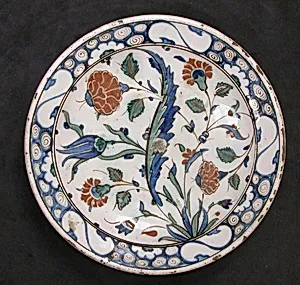
This elegant earthenware dish, glazed and dating to the late 16 century, exemplifies the refined ceramics of the Islamic world. Measuring 8 inches in diameter, hails from the Metropolitan Museum of Art's Islamic Art department, gifted by William B. Osgood Field in 1902. Though the artist remains unknown, such pieces were crafted by skilled potters in regions like the Ottoman Empire or Persia, where pottery served both practical and decorative purposes in daily life and elite households. The dish's surface likely features intricate motifs of flowers and leaves, recurring themes in Islamic art that evoke the lush gardens of paradise described in poetry and scripture. These designs, painted under a glossy glaze before firing, highlight advanced techniques in color application and durability—hallmarks of the era's ceramic innovation. Vibrant blues, greens, and reds, if present, would mimic nature's beauty, blending utility with artistry. As a snapshot of late Renaissance Islamic culture, this dish reflects a golden age of craftsmanship, where everyday objects became canvases for symbolic beauty. Visitors can appreciate how it bridges function and aesthetics, inviting reflection on the enduring allure of floral symbolism across centuries.