
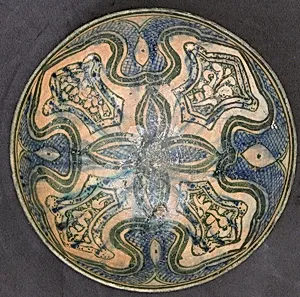
Dish
Unknown Artist
14th century
Medium
Stonepaste; underglaze painted
Dimensions
H. 4 in. (10.2 cm) Diam. 8 1/8 in. (20.6 cm)
Classification
Ceramics
Department
Islamic Art
Museum
Metropolitan Museum of Art, New York, NY
Credit
The Grinnell Collection, Bequest of William Milne Grinnell, 1920
Accession Number
20.120.203
Rights
Public Domain
Art Historical Context
This elegant 14th-century dish crafted from stonepaste with underglaze painting, the refined ceramics of the Islamic world.paste, also known as fritware, a innovative composite material developed by Islamic potters around the 10 century to imitate the translucency of Chinese porcelain which was unavailable outside East Asia. The underglaze technique involved painting designs directly onto the unfired body before applying a transparent glaze and firing, allowing vibrant colors to endure while creating a durable, glossy surface. Measuring just over 8 inches in diameter and inches high, this shallow dish was likely used for serving sweets, fruits, or beverages in affluent households. Produced during a flourishing era of Islamic art, such ceramics highlight the technical mastery and aesthetic sophistication of artisans in regions like Persia, Syria, or Egypt under Mongol or Mamluk influences. Motifs—though not specified here—often drew from nature, geometry, and calligraphy, reflecting Islamic aniconism and a reverence for harmony. These pieces were prized trade goods, spreading Islamic ceramic traditions across Eurasia. Now part of The Grinnell Collection at The Metropolitan Museum of Art, gifted in 1920, this anonymous masterpiece invites us to appreciate the anonymous genius behind everyday luxury, bridging medieval craftsmanship with modern wonder.