
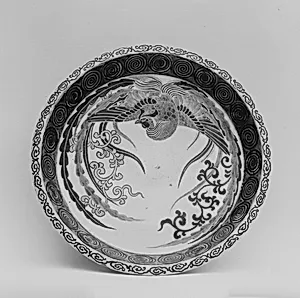
Dish
Unknown Artist
1700
Medium
Clay with a crackled transparent glaze decorated with enamels and gold (Hizen ware, Kutani type)
Dimensions
Diam. 8 1/2 in. (21.6 cm)
Classification
Ceramics
Culture & Period
Japan · Edo period (1615–1868)
Department
Asian Art
Museum
Metropolitan Museum of Art, New York, NY
Credit
Gift of Charles Stewart Smith, 1893
Accession Number
93.3.274
Rights
Public Domain
Tags
Art Historical Context
This elegant dish, crafted around 1700 during Japan's Edo period (16151868), exemplifies the artistry of Hizen ware the Kutani type. Made from clay and coated with a distinctive crackled transparent glaze, is vibrantly decorated with enamels and gold, likely featuring birds amid floral motifs—a common theme symbolizing grace and the natural world. Measuring 8½ inches in diameter, its luminous surface captures the era's fascination with luxury and beauty, produced in the porcelain hubs of Hizen (modern Saga Prefecture). Hizen ware, renowned for its high-quality porcelain, flourished under the patronage of feudal lords and wealthy merchants, blending Chinese influences with Japanese innovation. The Kutani style introduced bold overglaze enameling techniques, firing colorful enamels and gold at lower temperatures atop the glaze for intricate, jewel-like effects. The crackle in the transparent glaze, formed as it cooled unevenly, adds a textured, aged elegance that enhances the dish's tactile appeal. A gift to the Metropolitan Museum of Art from Charles Stewart Smith in 1893, this anonymous masterpiece reflects Edo Japan's cultural prosperity, where ceramics transitioned from utilitarian objects to coveted art forms, bridging daily life and aesthetic splendor.