
Dish
Unknown Artist
15th–16th century
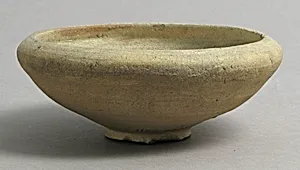
Medium
Earthenware
Dimensions
Overall: 1 9/16 x 3 15/16 in. (3.9 x 10 cm)
Classification
Ceramics
Culture
French
Department
Medieval Art
Museum
Metropolitan Museum of Art, New York, NY
Credit
Gift of J. Pierpont Morgan, 1917
Accession Number
17.194.2211
Rights
Public Domain
Art Historical Context
This delicate earthenware dish, crafted by an unknown French artist in the 15th or 16th century, a glimpse into the everyday artistry of late medieval Europe. Measuring just 1 9/16 x 3 15/16 inches (3.9 x 10 cm), its petite scale suggests it may have served as a personal dish, perhaps for salts, spices, or confections during meals in a prosperous household. Housed in the Metropolitan Museum of Art's Medieval Department and gifted by J. Pierpont Morgan 1917, it the humble yet refined ceramics produced in France during a transitional era bridging the Middle Ages and the Renaissance. Earthenware, made from low-fired clay, was a practical medium for tableware, prized for its affordability and versatility compared to costlier stoneware or porcelain imports. French potters of this period often applied lead glazes for a glossy finish, enhancing durability and visual appeal while reflecting regional traditions influenced by trade routes from Italy and the Islamic world. Though undecorated details are sparse, such objects highlight the democratization of beauty in domestic life. Today, this unassuming dish underscores the cultural importance of ceramics as windows into social history—revealing how ordinary people engaged with art through functional pieces that blended utility with subtle elegance. A true treasure for lovers of medieval craftsmanship!