
Dish
Unknown Artist
early 16th century
Medium
Brass
Dimensions
Overall: 15 1/2 x 1 7/8 in. (39.3 x 4.7 cm)
Classification
Metalwork-Brass
Culture
German
Department
Medieval Art
Museum
Metropolitan Museum of Art, New York, NY
Credit
Gift of W. L. Hildburgh, 1932
Accession Number
32.64.3
Rights
Public Domain
Tags
Art Historical Context
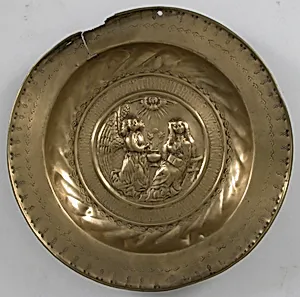
This exquisite brass dish, crafted by an unknown German artist in the early 16th, exemplifies the masterful metalwork traditions of the late medieval and early Renaissance periods. Measuring 15½ x 1⅞ inches, its shallow form suggests it served both practical and decorative purposes, perhaps for serving food or as a display piece in affluent households. Adorned with motifs featuring women—likely in narrative or allegorical scenes—the dish reflects the era's fascination with female figures in art, drawing from biblical, mythological, or everyday themes common in Northern European metalwork. German brassworkers, particularly from centers like Nuremberg, were renowned for their intricate techniques, including engraving, chasing, and repoussé, which brought depth and storytelling to utilitarian objects. This piece, classified under Medieval Art at The Metropolitan Museum of Art, bridges the Gothic and Renaissance styles, showcasing the transition toward more naturalistic forms and detailed figural representation. Its survival highlights the durability of brass as a medium, prized for its golden sheen and workability. A generous gift from W. L. Hildburgh in 1932, this dish invites visitors to ponder the lives of its makers and owners, offering a tangible link to Renaissance-era Germany where craftsmanship elevated everyday items into works of enduring beauty.