
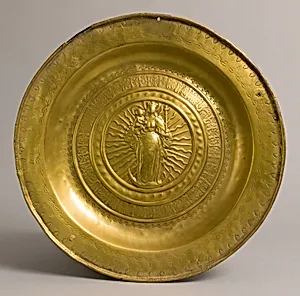
Dish
Unknown Artist
early 16th century
Medium
Brass
Dimensions
Overall: 15 1/4 x 1 7/16 in. (38.7 x 3.6 cm)
Classification
Metalwork-Brass
Culture
German
Department
Medieval Art
Museum
Metropolitan Museum of Art, New York, NY
Credit
Gift of W. L. Hildburgh, 1932
Accession Number
32.64.4
Rights
Public Domain
Tags
Art Historical Context
This elegant brass dish, crafted by an unknown German artist in the early 16th, exemplifies the exquisite metalwork traditions of late medieval and early Renaissance Europe. 15¼ × 1⅜ inches, its shallow, circular form likely served as a decorative serving platter or ceremonial object in a wealthy household. The central motif of the Madonna and Child— timeless emblem of maternal devotion and divine love—reflects the enduring Catholic piety in Germany just before the Protestant Reformation upheavals of the 1520s. German brassworkers of this era were renowned for their mastery of repoussé (hammering from the reverse) and chasing techniques, which allowed for intricate low-relief designs that caught the light beautifully. Such dishes blended functionality with artistry, often adorning banquet tables or altars, and their engraved borders might have included floral or geometric motifs symbolizing abundance and harmony. This piece captures a moment of transition, when Northern European craftsmen fused Gothic detail with emerging Renaissance humanism. A generous gift from collector W.L. Hildburgh in 1932, it now graces the Metropolitan Museum of Art's Medieval Art department, offering visitors a tangible link to the spiritual and domestic life of Renaissance Germany.